
The Stablecoin Law Gets Teeth as Treasury and Bank Regulators Roll Out GENIUS Act Rules
Nine months after Congress passed the GENIUS Act, FinCEN, OFAC, the FDIC, and the OCC are writing the fine print that will decide who gets to issue digital dollars.

By Media Mogul Crypto Desk · Digital Assets Bureau
· 2 min read
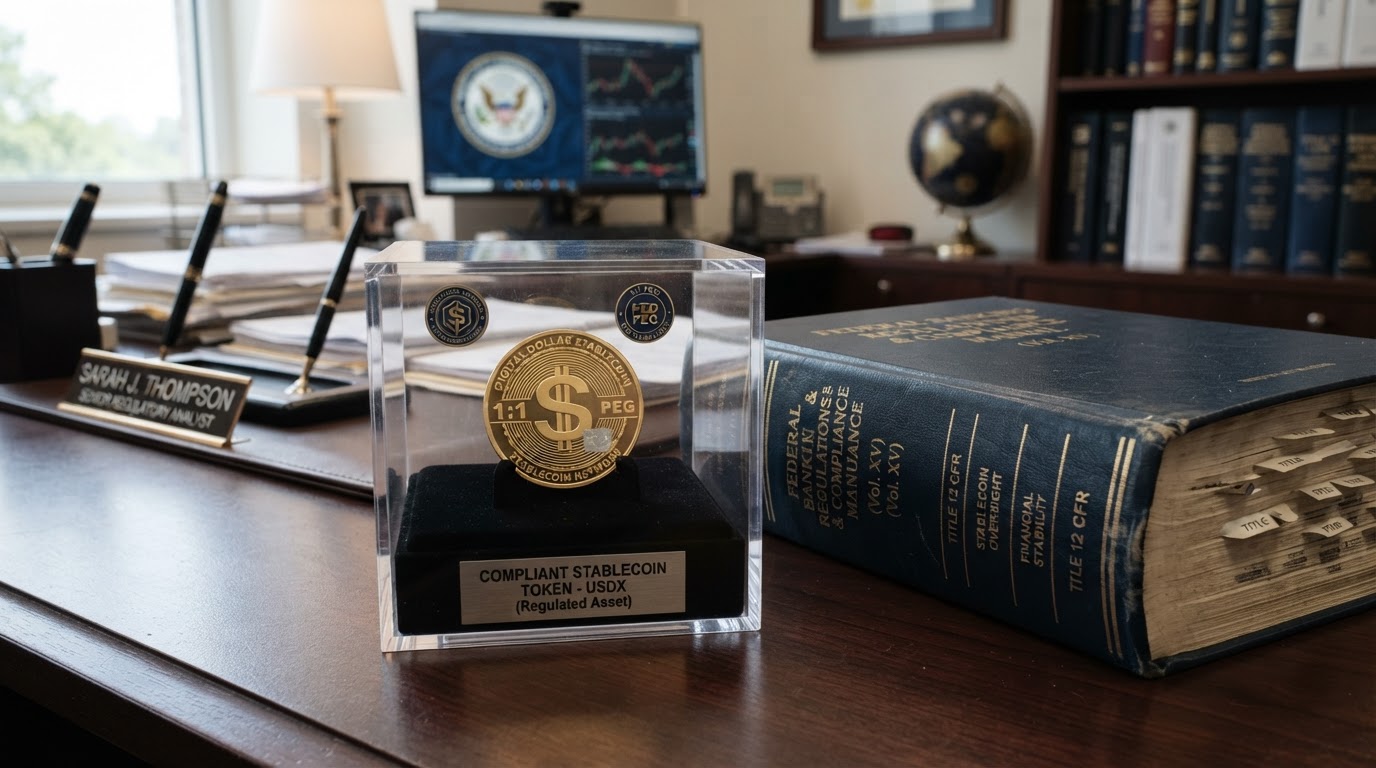
Congress passed the GENIUS Act in July 2025 and took a victory lap. The real fight, as always in Washington, is happening now in the rulemaking, where unelected regulators decide what the law actually means.
On April 8, the Treasury Department's Financial Crimes Enforcement Network and Office of Foreign Assets Control jointly proposed the rule that will govern illicit finance in the stablecoin market. Under the proposal, permitted payment stablecoin issuers would be treated as financial institutions under the Bank Secrecy Act, required to run programs against money laundering and to comply with sanctions.
Treasury Secretary Scott Bessent framed it as a balance. This proposal will protect the U.S. financial system from national security threats without hindering American companies' ability to forge ahead in the payment stablecoin ecosystem, he said. A public comment period follows publication in the Federal Register.
The bank regulators are moving too. The FDIC published its proposed standards for stablecoin issuers it supervises in the Federal Register on April 10, and the OCC has issued its own notice of proposed rulemaking for the issuers it will charter. Together these rules will determine capital, liquidity, and reserve requirements for anyone who wants to mint a regulated digital dollar.
Here is where readers should pay close attention, because the lobbying is intense and mostly invisible. Bank trade groups are fighting provisions in the pending Senate market structure bill that would let stablecoin issuers pay rewards to holders. Banks call that a run around the ban on stablecoin interest. Crypto firms call it competition for your deposit dollars, which banks have enjoyed nearly free for years. Both descriptions are true, and that is exactly why the fight is so fierce.
There is a genuine upside to getting this right. A regulated stablecoin sector means audited reserves, real redemption rights, and rules against the kind of games that destroyed TerraUSD and forty billion dollars of wealth. Analysts at Brookings and elsewhere have noted that the framework could make digital dollars a legitimate payments rail rather than a casino chip.
There is also a genuine risk. Compliance regimes built for banks can become moats that only the largest players can afford, handing the market to a few giants and to politically connected issuers. One of those politically connected issuers happens to be partly owned by the president's family, a conflict we examine separately in this section.
The comment periods on these rules are open to the public, not just to lobbyists. If you care whether the digital dollar in your wallet answers to you or to Washington, this paperwork, boring as it looks, is where that question gets settled.
Sources
- https://home.treasury.gov/news/press-releases/sb0435
- https://www.federalregister.gov/documents/2026/04/10/2026-06974/genius-act-requirements-and-standards-for-fdic-supervised-permitted-payment-stablecoin-issuers-and
- https://www.occ.gov/news-issuances/bulletins/2026/bulletin-2026-3.html
- https://www.brookings.edu/articles/next-steps-for-genius-payment-stablecoins/
- https://rollcall.com/2026/07/22/revised-gop-crypto-package-doesnt-assuage-democrats-concerns/
Questions readers ask
What is Media Mogul News?
Media Mogul News is an independent, reader-supported news site led by Chief Editor Nate Jurewicz. We cover the stories corporate media skips: political corruption, Big Pharma, the deep state, election integrity, cannabis freedom, crypto and the money behind all of it.
What is your political stance?
We are pro-liberty, pro-cannabis, anti-war and anti-corruption, and we hold both parties to the same standard. We are not a party outlet. When the people we agree with get something wrong, we say so.
How is Media Mogul funded?
By readers. We take no pharmaceutical advertising and no money from the industries we cover. Support comes from newsletter readers, donations and Media Mogul merchandise.